Think of the one person you ride with who makes the same climb feel easier. Now the one who makes an easy day feel like a test. Same legs both days. Something else changed.
Two riders said something this week that the sport filed under "retirement" and "comeback".
Pauline Ferrand-Prévot, 34, Olympic champion, winner of the Tour and Paris-Roubaix, wrote in her own post that she had done everything right for a second Tour, won nothing, and lost the joy of ordinary life. What brought her back, in her words, was not rest. It was being needed by someone, and a day with no result in it. At 34, she said, she had just felt happiness without sacrifice for the first time in her life.
Joe Pidcock, 24, ended his career and wrote that he had tried to be good at his sport and tried to enjoy it, as two separate projects. For years the season ended with him wanting out. This year he was happy. So he stopped.
I'm not going to explain either of them. They wrote what they wrote. I'm going to explain the mechanism they're both standing next to, because it was mine, and it's the one this whole series has been circling: how much of what you built you can reach, and what it costs, is decided by your state. And your state is not decided alone.
Your body reads the room before the story is finished
Here is the part nobody in sport talks about, because it sounds soft and it's the hardest physiology there is.
The nervous system does not decide by itself whether you are safe. It reads the people around you: faces, tone of voice, how fast they talk, how they breathe, whether they look at you or through you. It does this below thought, in the first seconds, before you know what you think of anyone. And it answers with the body: the out-breath gets shorter, the belly holds, the jaw sets, the speech speeds up. The other person's body reads your answer and answers back. Two nervous systems adjusting to each other, and neither of you has checked the reading.
That is what a team is, before it is a plan. This part is measured: watch a stressed person for a few minutes and your own stress hormones rise with his, in about one observer in four, in four out of ten when it is someone close to you, and it works through a screen. Hold the hand of someone you trust under threat and the threat response in the brain drops; a stranger's hand does less. The bus where everyone is a notch too tight, the kitchen where one person is calm: nobody has put those under a scanner, and I don't need them to. The mechanism is the same one, running all day instead of for minutes. You call it atmosphere. It is the people around you, in your tone, before anyone says a word.
01 · What was measured
Stress is contagious.
Observers showed a cortisol rise while watching someone under stress.
All observers · approximatelyWhen the person under stress was their partner.
Intimate partnersThrough a screen, too.
The response also occurred in observers watching by live video.
A separate study · Contact under threat
Holding a spouse’s hand reduced threat-related brain activity. Holding a stranger’s hand did less.
The room widens the gap
Last issue was about capacity, and how much of it reaches you. Here is how the people around you change that number.
When the body reads a room as a threat, part of the system stops serving the task and starts managing the contact. Attention does two jobs. Muscles hold a social strategy: look strong, don't show it, keep the peace. The breath bends around that hold. The reserve you had for the climb, the meeting, the night's sleep, gets spent on the room. From outside the result looks fine. The system paid more than the task needed.
Do that for a season and you have a rider who trains well, sleeps badly, gets sick after the block, and "lacks motivation" by August. Nothing in the plan explains it. The plan never measured who was on the bus.
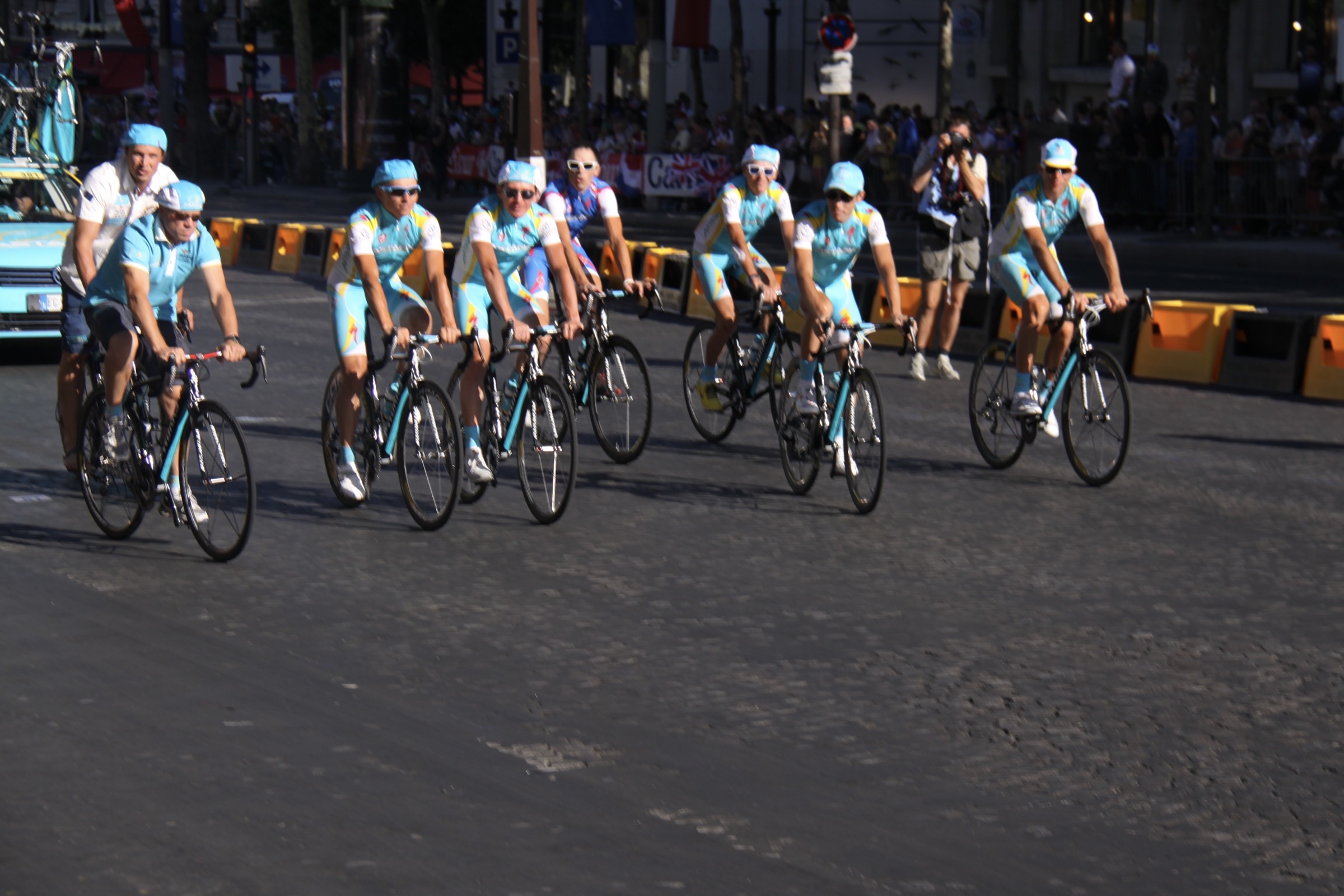
In 2012, I moved from RadioShack to another team. I came from an American way of working, with relationships I experienced as respectful. The new team had more tough love, more emotion and more direct pressure.
I was not used to it. It was not necessarily as bad as I experienced it. But after the first stage of my first race, I went to the boss and asked to end the contract.
Eventually, I said I had got used to it. Those first two months were full of insomnia and anxiety. During the race, I was sleeping about two hours a night.
Looking back, getting used to it meant blocking more of what I felt so I was able to keep going. The tension became familiar. I noticed less of it. From the outside, I had adapted. I was still paying for it.
You can't feel which room you're in
This is where the last two issues come back. A body that has stopped feeling itself, to carry the weight, has also stopped feeling what the room does to it. So you stay. You stay in the team that keeps you in a state of readiness and call it professionalism. You stay in the friendship that costs you a day of recovery every time and call it loyalty. You stay in the relationship where you have to be fine, and you are fine, and that's the problem.
A tight jaw around a colleague turns into "he's difficult". A held belly in the first minute of a call turns into "this client is a threat". The body's response is real. The story you attach to it is a guess. And a label gives you one option: avoid. A reading gives you eight.
You are somebody's room too
Now turn it around, because this is the part the series promised.
Your people read you the same way. Anger you don't feel comes out as cold. Need you don't feel comes out as resentment. A body that is always ready sends that into every room it enters, and the people at home are in that room every evening. They get the version of you that is fine. They adjust to it. They arrange themselves around the person they know, and when you start to change, their concern is real, and it is not neutral. "Are you sure this is good for you" is the sound of someone recalibrating to a nervous system that just moved.
02 · The loop in contact
You are somebody’s room too.
What changes in you first?
Listen to their voice. Notice their pace. As they speak, what changes in your body first?
When things were going badly in sport, I often came home disconnected and closed off. My wife usually met me with energy, good humor and optimism.
Within minutes together, I watched that change. Her mood dropped. She became quiet, closed off, harder to reach.
She kept trying to help, to lift my mood. But my armor was too thick to let her in. She had been in a different state when I walked through the door. Now both of us were closed off.
So the question of this whole series turns here. Validation was a borrowed verdict: you needed someone outside to tell you it was good, because the instrument inside was switched off. People are the other half of the same need. Nervous systems regulate each other. That's not a weakness, it's how we're built. The only question is what you borrow from the people around you: a verdict, or a state.
What comes back, and by which road
Read Ferrand-Prévot's post again with that in mind. She had rest. Rest didn't do it. What did it was being needed by someone, and a day that could not be won or lost. A system organized around one scored output stops producing anything unscored, and that includes the pleasure of a morning and the wish to see people. It isn't lost. It's switched off, because only one currency counts. Switching the sport off doesn't switch the rest back on; that's why the off-season feels empty and not free. What switches it on is output that nothing depends on: being useful to another person, movement with no verdict, a room where nobody is scoring you.
Pidcock named the two projects, being good and enjoying it, and found the year they stopped fighting. I don't know what was around him that year. I know what the sentence means in the body: the room stopped being a threat.
What to do with the people you have
I'm not going to tell you to change your team or your friends. Influence is real; control of another adult is not, and most of the rooms you're in, you chose for reasons the body understood before you did.
The work is the same order as always. Feel it first: in the most important interaction of your week, what changed first in the body, before the story arrived? Treat the story as a guess. Then change one variable in that room, not the person: a question instead of a statement, a slower first answer, one silence you don't fill, one plain sentence you've been swallowing. Then go back into the same room and read it again. The loop turns the other way just as mechanically as it turned this way. Nobody decided the first direction either.
03 · In your next important interaction
Change one thing.
Read it again.
Think of one conversation you keep leaving tense. Next time, notice what changes first in your body. Choose one thing to do differently.
Try this
Before your next answer, pause. Then speak a little slower.
And at home: let them see the change before they're asked to trust it. Log the concern. Don't obey it, don't argue with it.
One honest limit. Some rooms destroy function or dignity, and the right move is to leave. The reading tells you which one you're in. Nothing else does.
What you get back is the thing both of those riders described from opposite ends of a career: a body that can be in a room without paying for it, people who get you and not the mask, and a sport you can enjoy and be good at in the same year.
This closes the pain of external validation, five of five. Part one was the win that didn't arrive, two the off-season, three the brake, four the age. All on the site, none needed to read this one.
JB
Sources and research context
JB METHOD internal documents. The body reads the room before the story is finished; the loop from both sides; the room widening the gap; signal before blame; the people you love arranged around the version they know; influence real, control of another adult not: JB METHOD program materials (Capacity Under Load).
Outside the library.
Buchanan TW, Bagley SL, Stansfield RB, Preston SD. The empathic, physiological resonance of stress. Social Neuroscience. 2012;7(2):191-201. doi:10.1080/17470919.2011.588723. Observers' cortisol rose in step with a stressed speaker's; the first demonstration that stress is physiologically contagious.
Engert V, Plessow F, Miller R, Kirschbaum C, Singer T. Cortisol increase in empathic stress is modulated by emotional closeness and observation modality. Psychoneuroendocrinology. 2014;45:192-201. doi:10.1016/j.psyneuen.2014.04.005. Watching someone under stress raised cortisol in 26 percent of observers; 40 percent when the stressed person was a partner, 10 percent for strangers; 24 percent through a video link.
Coan JA, Schaefer HS, Davidson RJ. Lending a hand: social regulation of the neural response to threat. Psychological Science. 2006;17(12):1032-1039. doi:10.1111/j.1467-9280.2006.01832.x. Under threat of shock, holding a spouse's hand reduced threat-related brain activity; a stranger's hand reduced it less; the effect grew with the quality of the marriage.
Palumbo RV, Marraccini ME, Weyandt LL, et al. Interpersonal autonomic physiology: a systematic review of the literature. Personality and Social Psychology Review. 2017;21(2):99-141. doi:10.1177/1088868316628405. Heart rate, skin conductance and other autonomic measures covary between people in contact; the field is real and methodologically uneven, which is the honest limit of the claim.
Porges SW. The polyvagal perspective. Biological Psychology. 2007;74(2):116-143. doi:10.1016/j.biopsycho.2006.06.009. Neuroception: the nervous system evaluates safety and threat from faces, voices and posture below awareness.
Ferrand-Prévot P. Public statement, 2 November 2026, reported by IDL Pro Cycling. Pidcock J. Public statement, 1 November 2026, reported by CyclingUpToDate. Quoted only in their own words; no interpretation of either rider's inner state is made.