JB Method

Reliable Under Pressure.

Your capacity can remain high while the cost of accessing it keeps rising.

JB METHOD is a body-first 12-week process for elite athletes and senior leaders. For athletes, access to capacity may become less reliable as competition pressure rises. For leaders, business performance may remain strong while sleep, physical well-being, relationships, sport, and life outside work begin to carry more of the cost. We map how breath, structure, nervous-system state, recovery, behavior, and total load interact, then develop and test more adaptable options under real demand.

Choose a time and answer a few short questions before confirming your consultation.

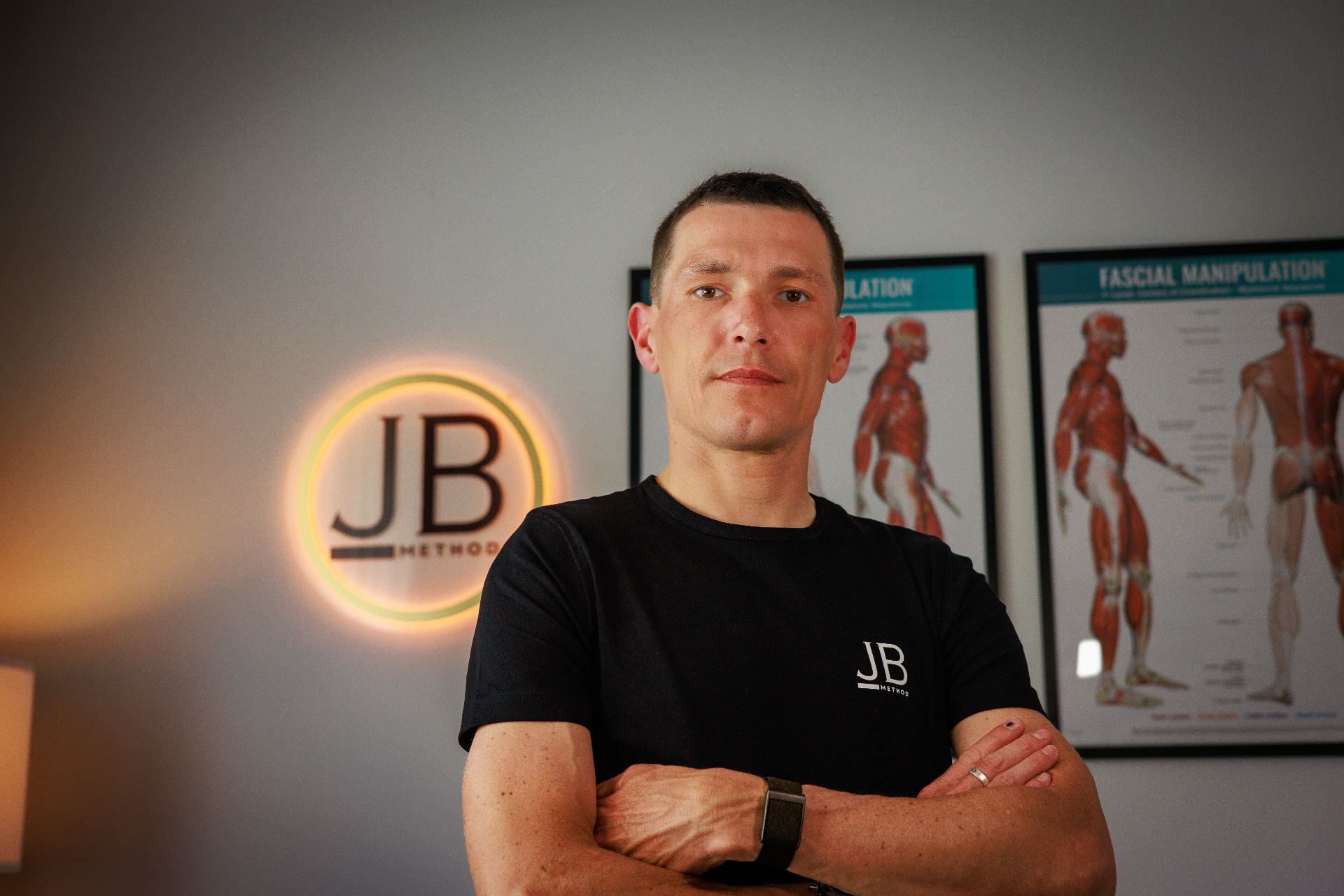
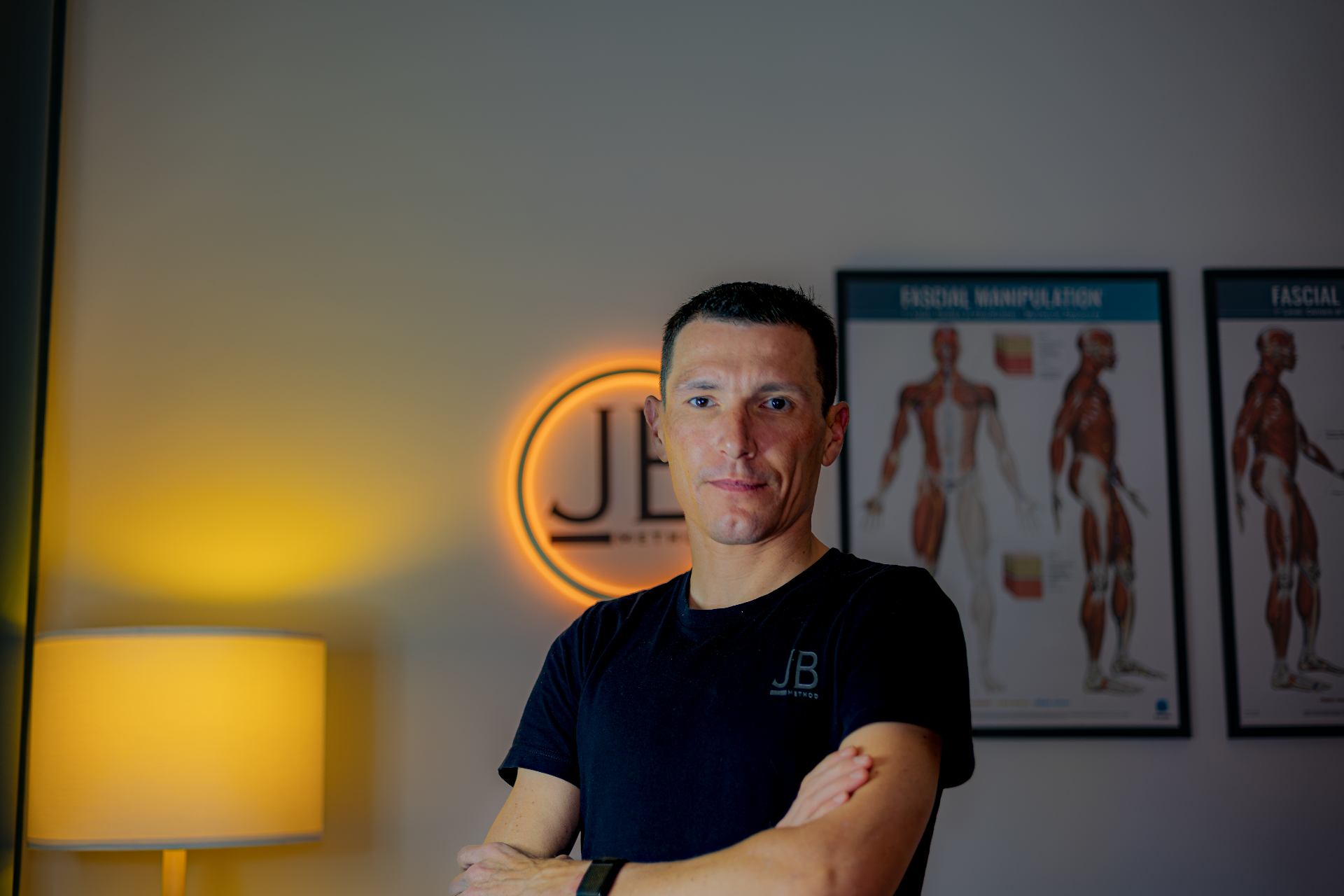
Jani Brajkovič

Jani Brajkovič

Olympian | U23 Time Trial World Champion

Founder of JB METHOD

Worked with WorldTour cyclists, Olympians, Track and Field athletes, and Elite Football players

THE EARLY SIGNALS

WHEN HIGH PERFORMANCE STARTS TO COST MORE

High capacity can remain visible while the system spends more to maintain it. The first signs may appear in performance. They may also appear in recovery, physical tension, patience, relationships, or the ability to be fully present outside the role.

BACKGROUND TENSION

Your jaw, ribs, shoulders, or hips stay guarded after the demand has passed. Breathing and movement become less adaptable, and energy is spent maintaining readiness before the next task begins.

INCOMPLETE RECOVERY

You may sleep enough or take time away, yet never fully downshift. The next session, meeting, conversation, or decision begins while the previous load is still active.

ACCESS OR PRESENCE SHIFTS

As pressure rises, breathing changes, attention narrows, and timing, judgment, patience, or emotional availability can change. The capacity may still be there. The range available to you becomes narrower.

LIFE OUTSIDE THE ROLE NARROWS

Work or sport keeps receiving your best-organized energy. Family, relationships, friendships, hobbies, movement, and simple enjoyment receive what remains. Success stays visible while the life around it becomes smaller.

Neural network visualization representing nervous system regulation

Your body adapts to demand.
Sometimes, the adaptation becomes the limit.

Repeated pressure shapes how the system organizes breathing, muscle tone, attention, movement, and recovery.

A strategy that once created stability or control can become expensive when it remains active beyond the moment it is needed.

The work begins by mapping that organization, then developing and testing more adaptable options under real load.

A Working Map

How the pattern reinforces itself

01 DEMAND

Training, competition, responsibility, travel, and accumulated life load increase what the system must manage.

02 ORGANIZATION

Breathing, muscle tone, attention, movement, and behavior adjust. The strategy may improve control or output in the short term.

03 COST

When the strategy stays active, output may remain high while recovery, adaptability, physical well-being, relational presence, and life outside the role carry more of the cost.

When the strategy stays active, output may remain high while recovery, adaptability, physical well-being, relational presence, and life outside the role carry more of the cost. The person responds with more effort, control, recovery work, or withdrawal, which can reinforce the same organization.

The work: map the loop, develop more adaptable options, and test them under real load.

The System Map

What shapes access to capacity

No single variable explains performance. We map how sensing and perception, state regulation, breath and pressure, structure and movement, recovery and adaptation, load and behavior, and data and support interact. Then we test which changes improve reliability in the real environment.

The aim is not to optimize everything. It is to find the interaction currently carrying the highest cost.

Layer 01 / Inner signal

How the system reads and regulates itself

01

Sensing & Perception

How accurately you notice effort, tension, fatigue, emotion, and the early shift that happens before output changes.

02

State Regulation

How effectively you mobilize for demand, adjust intensity, and return toward recovery when the demand has passed.

03

Breath & Pressure

How breathing and internal pressure adapt across rest, movement, speech, training, and competition.

Layer 02 / Physical organization

How the body carries and restores load

04

Structure & Movement

How the ribcage, pelvis, spine, and limbs share load, create force, and change strategy when demand rises.

05

Recovery & Adaptation

How sleep, nutrition, downshift, and recovery inputs translate into readiness over time.

Layer 03 / Context and inputs

What the environment keeps asking for

06

Load & Behavior

How training, work, travel, pacing, control, and daily choices add to or reduce total demand.

07

Data & Support

How subjective signals, performance data, and selected tools guide decisions without replacing judgment.

The 12-week process

How Performance Reorganization Works

The work moves through four overlapping phases. Each phase informs the next and may be revisited as demand changes.

  1. Phase 01

    Awareness & Mapping

    Make the current organization visible

    We map history, current demands, breathing, muscle tone, movement, recovery, perception, behavior, and available data. The aim is to identify which interactions become costly as pressure rises and what needs to be tested.

  2. Phase 02

    Reorganization

    Develop more adaptable options

    We work first on the interaction carrying the highest cost. Somatic practice, breath and pressure work, movement, recovery, and load decisions are used to develop options beyond the dominant strategy. Each change is treated as a hypothesis and tested.

  3. Phase 03

    Capacity Under Load

    Test change where demand rises

    New options are tested progressively through training, decision-making, fatigue, speed, uncertainty, and performance pressure. What does not hold under demand is adjusted before greater load is added.

  4. Phase 04

    Integration

    Make it usable in the real environment

    Useful changes are integrated into competition, work, travel, recovery, and daily routines. The goal is more reliable access to capacity across changing contexts, without dependence on a perfect session or environment.

Go deeperExplore the full method

Read the complete system, the two performance pathways, and the 12-week delivery.

The two pathways

One Method. Two Performance Contexts.

The principles remain consistent. The demands, language, and testing environment change according to the person and the work they need to perform.

Elite Athlete

Work is organized around competition, training load, recurring tension or pain, recovery, travel, selection pressure, and access to skill when intensity rises.

We test whether changes remain available through speed, fatigue, uncertainty, and competition.

Senior Leader

You may still be exceptional at what you do. The organization sees results, difficult decisions are made, and responsibility is carried. The cost often appears elsewhere, in sleep, physical tension, patience, relational presence, friendships, sport, enjoyment, or the sense that life has become organized around work and recovery from work.

The work is organized around the complete system supporting that output. We test whether clarity, energy, recovery, and presence remain available through sustained responsibility, conflict, travel, uncertainty, and the transition back into life outside the role.

Both pathways are private, individualized, and built around the person's actual demands.

BOOK A 30-MINUTE CONSULTATION

Book a complimentary 30-minute consultation to establish fit and scope.

Why I built this

Jani Brajkovič — Olympian, somatic performance coach, and creator of the JB Method

I had the capacity.What became unreliable was my access to it.

At the highest level of cycling, I knew how to train, endure, and perform. My career showed what the system could produce. It also showed how much output can hide: chronic tension, incomplete recovery, tighter control, and a growing gap between what I could do and what I could reliably access.

I first looked for answers in the places elite sport usually looks: training, nutrition, recovery, and mental strength. Each mattered. Treated separately, they did not explain how breathing, muscle tone, structure, perception, behavior, and total load were interacting.

JB METHOD grew from living that gap, then spending years studying and testing what helps useful change remain available when demand rises.

I built the work I needed when results alone could no longer tell me how well the system was functioning.

Read the full story →
CAREER12 Years WorldTour
OLYMPIC GAMESLondon 2012
TOUR DE FRANCETop 10 GC
CRITÉRIUM DU DAUPHINÉOverall Winner
WORLD CHAMPIONSHIPSU23 Time Trial Champion
VUELTA A ESPAÑALeader’s Jersey
Jani Brajkovič signature

The Fit Check

When private work is the right fit

Private work may fit when the demand is real, the current organization is carrying a meaningful cost, and the person is willing to take an active role in observing and testing change.

Strong Fit

This work may fit if…

  • You are an elite athlete or senior leader with established capacity, but access becomes less reliable as demand rises.
  • Your work or sport output may still be strong, but sleep, physical tension, health behaviors, relationships, hobbies, presence, or life outside the role are paying an increasing price.
  • Recurring tension or pain, incomplete recovery, disrupted sleep, or changes in clarity and behavior are affecting performance.
  • You want to understand how breath, structure, state, recovery, behavior, and total load interact.
  • You are willing to observe, practise, and test changes between sessions.
  • You want evidence of change in the environment where performance is required.
Ready for a fit-check
Limited Fit

Another approach may fit better if…

  • You want a passive treatment, quick fix, or fixed protocol.
  • You want more output regardless of the internal cost.
  • You expect one technique or one session to resolve a complex pattern.
  • You are unwilling to reconsider workload, recovery, training, or behavior when the evidence points there.
  • You need medical or psychological diagnosis, treatment, or crisis support as the primary service.
Another form of support may fit better

Case Files

How the work is tested in practice

Selected examples from private work. Each case shows the starting context, the working hypothesis, what was tested, and what was observed afterward. These are individual cases. They do not predict outcomes or isolate one intervention from training, medical care, and life context.

Case File 01M.S. | TRACK & FIELD ATHLETE
Context

Post-operative pain kept returning. Structural review did not explain why the pattern persisted, and the athlete had not set a personal best for seven years.

Working Hypothesis

Persistent guarding, muscle tone, breathing, and the way load was being organized may have been reinforcing the recurring pattern.

What We Tested

Somatic work, breath and movement changes, followed by progressive testing under athletic load.

Observed Change

The athlete reported that the pain pattern stopped recurring and confidence in the body improved. The athlete later set a personal best, the first in seven years.

Evidence Note

Athlete report and performance result. One individual case.

Case File 02KENNETH V. | CYCLIST
Context

After hard sessions, he struggled to fall asleep. His body stayed tense, his mind remained active, and recovery felt incomplete.

Working Hypothesis

Training load, breathing pattern, post-session muscle tone, and recovery rhythm may have been limiting his ability to shift after effort.

What We Tested

Breathing adjustments, post-session downshift practice, and changes to the recovery rhythm.

Observed Change

He reported more reliable sleep after hard efforts, clearer body signals, and a better ability to settle after load.

Evidence Note

Self-reported sleep and recovery. One individual case.

Athlete Perspective

What the work feels like over time

I've worked with Jani since 2020, and JB Method has changed the way I relate to my body, my nervous system, and my sport. Through precise coaching online and in person, I've relearned movement patterns, improved efficiency, and moved with far more ease and awareness. Since working with him, I've seen clear improvements in recovery, performance, and in how connected and responsive my body feels under load.

B.M. | Pro Cyclist | Mentored since 2020

The Performance Consultation

A clear decision before the work begins

A private 30-minute conversation. We clarify the relevant challenge or cost, review relevant context and previous attempts, and decide whether the 12-week work is the right fit for both sides.

STEP 01
0–10 MIN

DEFINE THE TARGET MOMENT

We clarify where capacity becomes less reliable or more expensive to maintain, what changes under demand, where the cost is appearing, and why it matters now.

STEP 02
10–20 MIN

REVIEW CONTEXT & READINESS

We discuss relevant context, what has already been tried, current constraints, and whether you are ready to observe, practise, and test changes between sessions.

STEP 03
20–30 MIN

DECIDE FIT & SCOPE

We decide whether JB METHOD matches the problem, timing, and level of support required. If it does, I explain the 12-week process and the next step.

This conversation is for fit and scope. Individual assessment, coaching, exercises, detailed data review, and the System Map begin inside the paid process.

Choose a time and answer a few short questions before confirming your consultation.

30 Minutes
Short Questions
Mutual Fit

Before You Book

Practical Questions

Clear answers about scope, delivery, measurement, and professional boundaries.

It is private performance coaching and education. The work can include body awareness, breathing, movement, recovery, load, perception, and behavior. It does not diagnose or treat medical or psychological conditions, and it does not replace qualified care.

Elite athletes and senior leaders with established capacity and a specific performance problem that becomes more costly or less reliable as demand rises.

We define the target moment, establish a useful baseline, and track change through subjective signals, observed behavior, performance or work output, recovery, and selected data. Wearables are optional. They add context when relevant, but they do not replace judgment.

Yes. Most of the process can be delivered online through conversation, observation, guided practice, and testing between sessions. In-person work is used when relevant.

Possibly, in specific areas and for a clear reason. The dose, timing, or distribution of load may need to change while we test whether access, recovery, or reliability improves.

Medical assessment and treatment come first when indicated. Within that boundary, we can examine how breathing, muscle tone, movement strategy, recovery, behavior, and total load interact with performance.

High output is only one measure of how well the system is functioning.

JB METHOD works with elite athletes and senior leaders whose capacity is proven, but whose current way of maintaining performance is becoming less reliable or more costly under sustained demand.

30 Minutes
Direct Booking
Athletes & Leaders
Current status: 1 spot left for August

Limited private capacity by design. Consultations are held on Tuesdays and Fridays.