About two liters of blood a minute. That is how much leg blood flow changed when researchers made breathing work much harder or easier in seven male cyclists at maximal effort.
Last issue was about the rent: the oxygen your breathing muscles burn before your legs get anything. This issue is about the part most breathing coaches never mention. The rent isn't only oxygen. It's blood.
The reflex
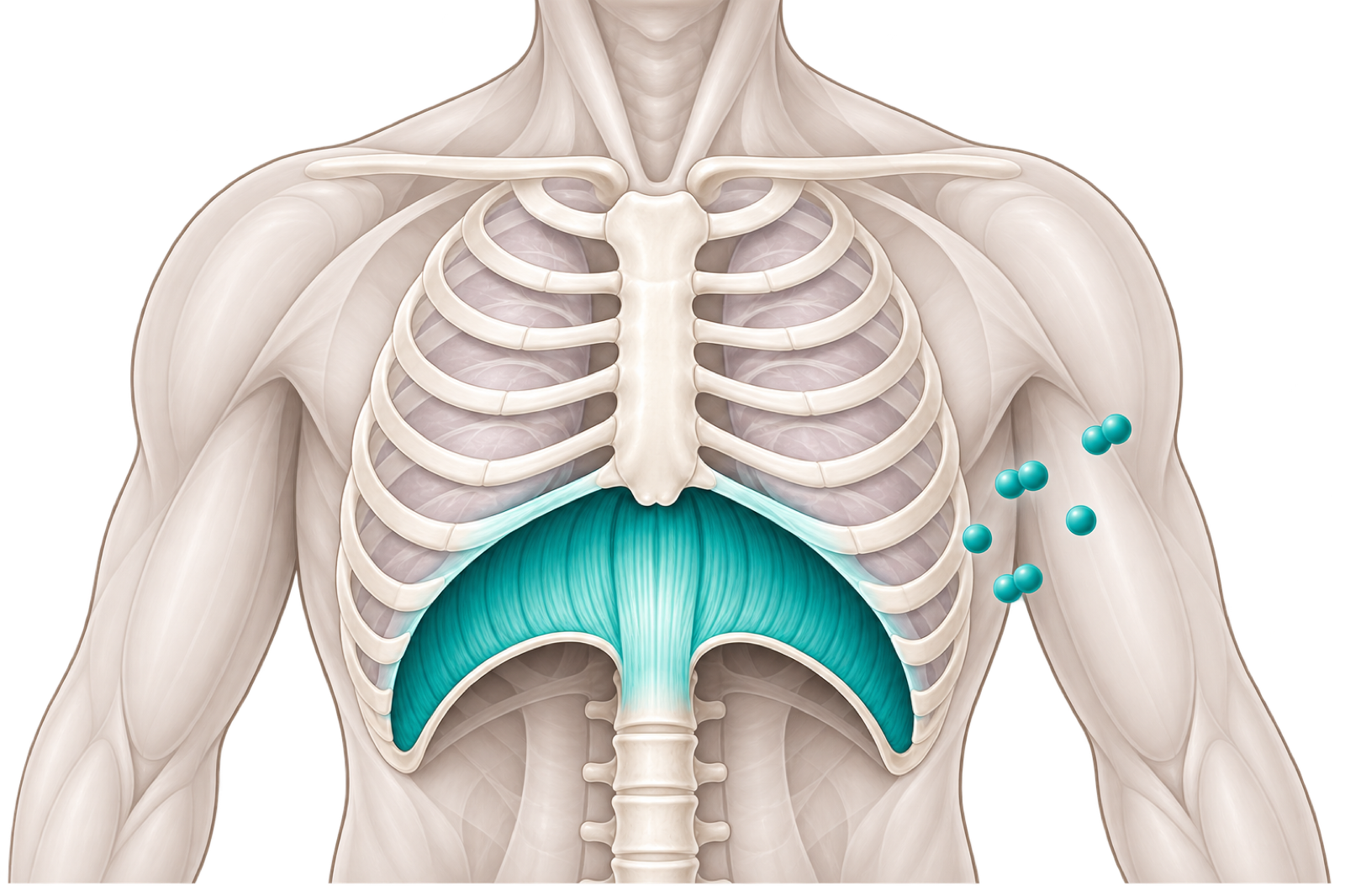
In the 1990s, Craig Harms and Jerome Dempsey put seven trained male cyclists on a machine that could make breathing easier or harder while they rode at maximal effort. Blood flow to the legs was measured directly.
When the work of breathing was raised by about fifty percent, blood flow to the legs dropped by about eleven percent. Same workload. When breathing work was lowered by about fifty percent, it went up. That meant a change of about two liters a minute in either direction in this small experiment.
Here's the mechanism, in plain words. When the muscles that breathe get tired, they send a signal to the brain. The brain answers by narrowing the blood vessels in your legs. It protects the pump first. The legs get what's left.
And it shows up on the clock. In a separate study of seven male cyclists riding at a workload requiring ninety percent of maximal oxygen uptake, easier breathing extended time to exhaustion by an average of fourteen percent in the trials where it improved. Harder breathing shortened it by fifteen percent in the trials where it fell. This test measured time to exhaustion, not a change in VO2max.
One honest limit, because the people who quote this study rarely give it. The reduction in working-leg blood flow was measured at maximal effort. A separate study of ten young men doing knee-extension exercise at forty percent of peak oxygen uptake found no reduction in flow to the active legs when breathing was made harder. It reduced flow to the inactive arm instead. That test was not a cycling race. So this is not "every hard breath costs you blood."
But look at where efforts close to the limit can happen. The hard parts of a climb. A selection on a mountain. The experiments do not tell us the exact point at which an individual rider's leg flow changes during a race. They do show why breathing work deserves attention when effort stays high.
Breathing work → leg blood flow
The effort changes the answer
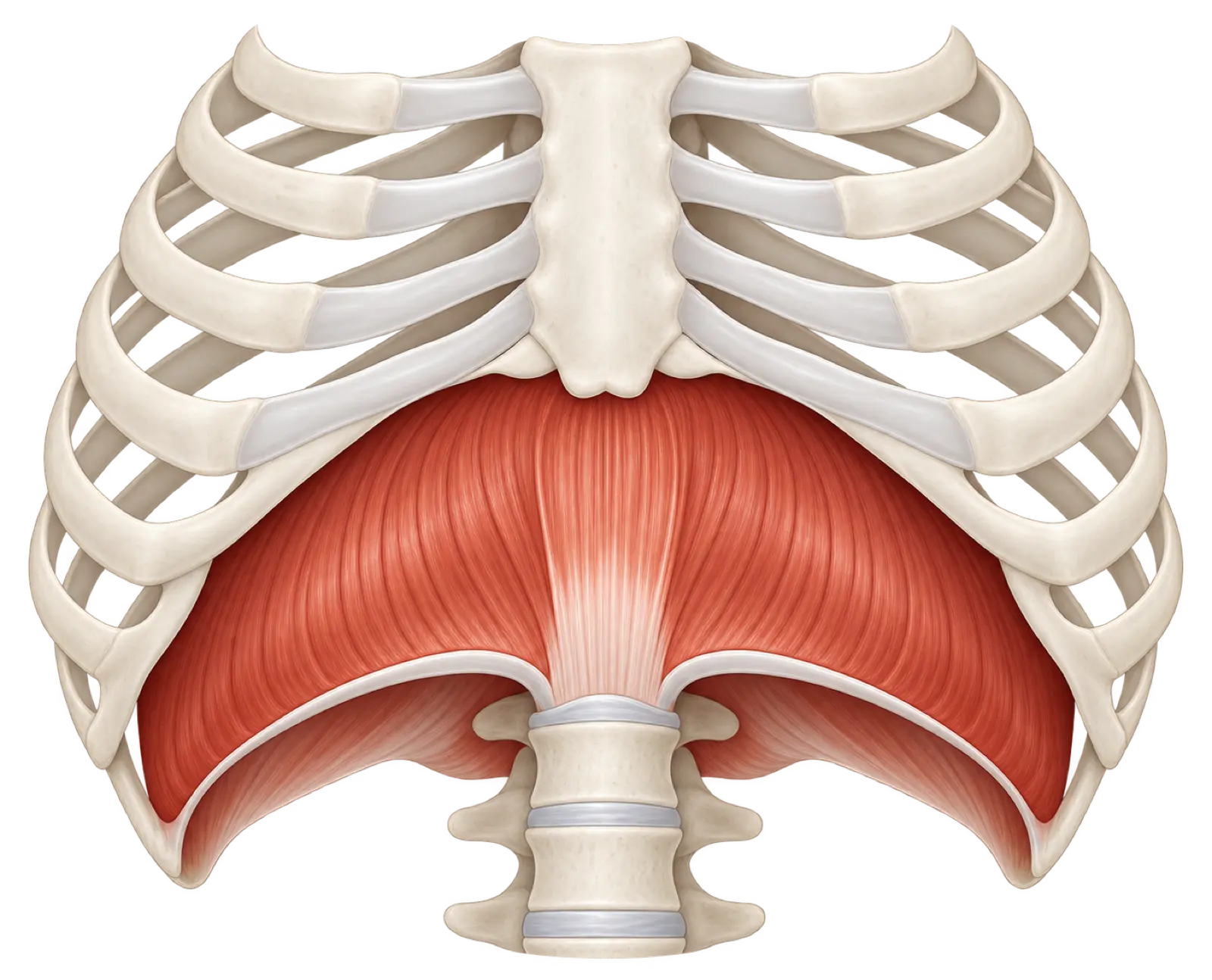
Breathing muscles
Work rises
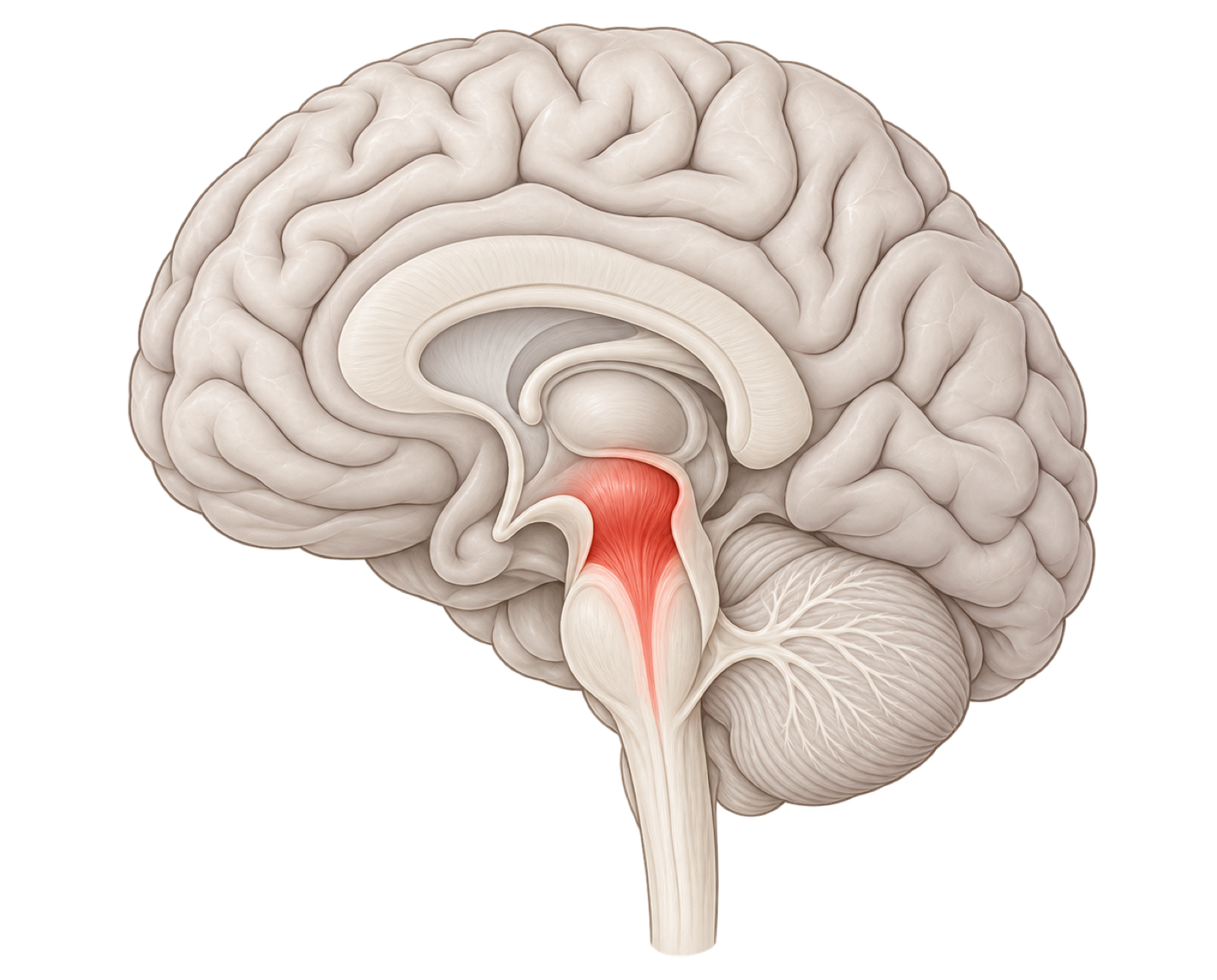
Reflex signal
Nerve response
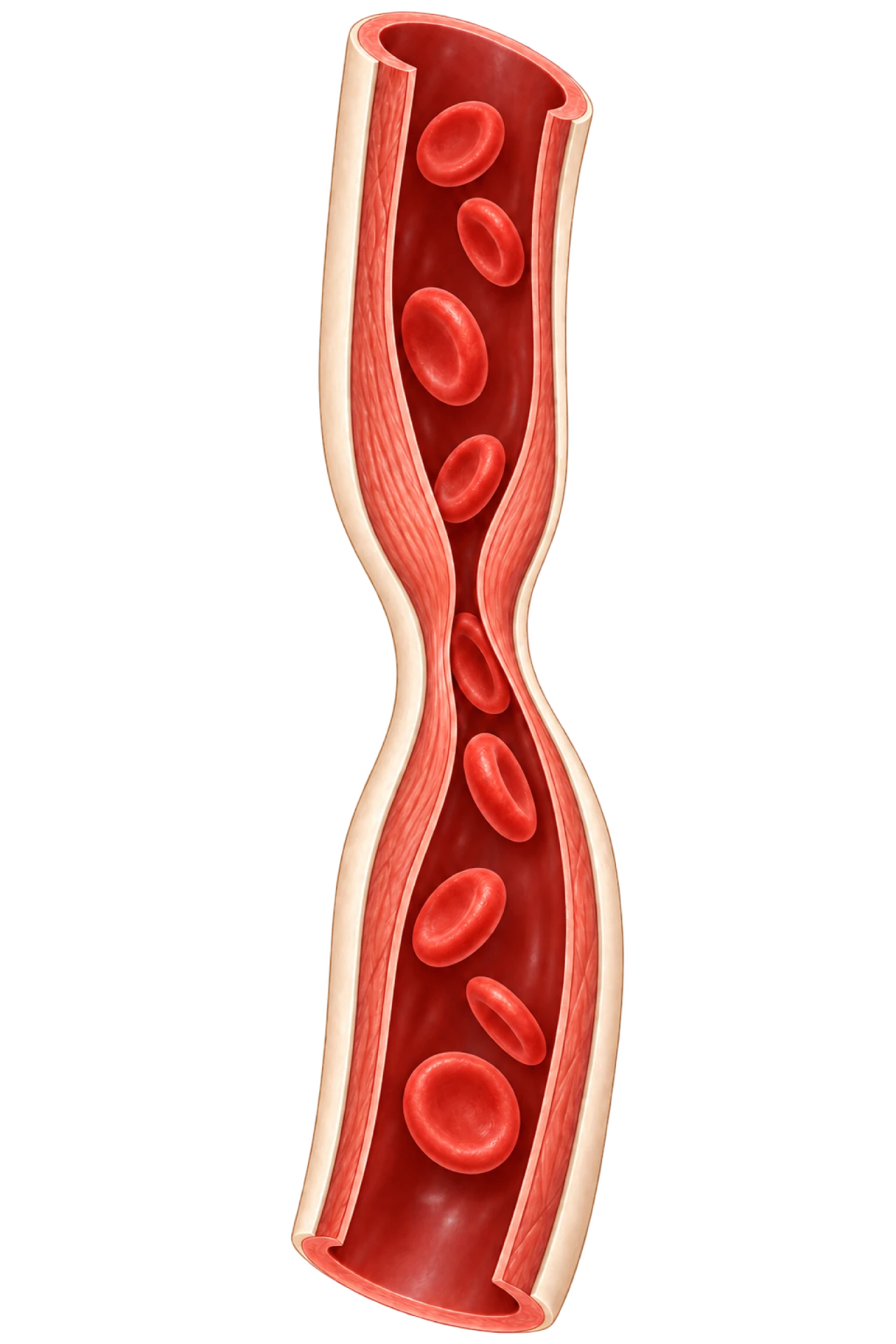
Leg vessels
Flow is regulated
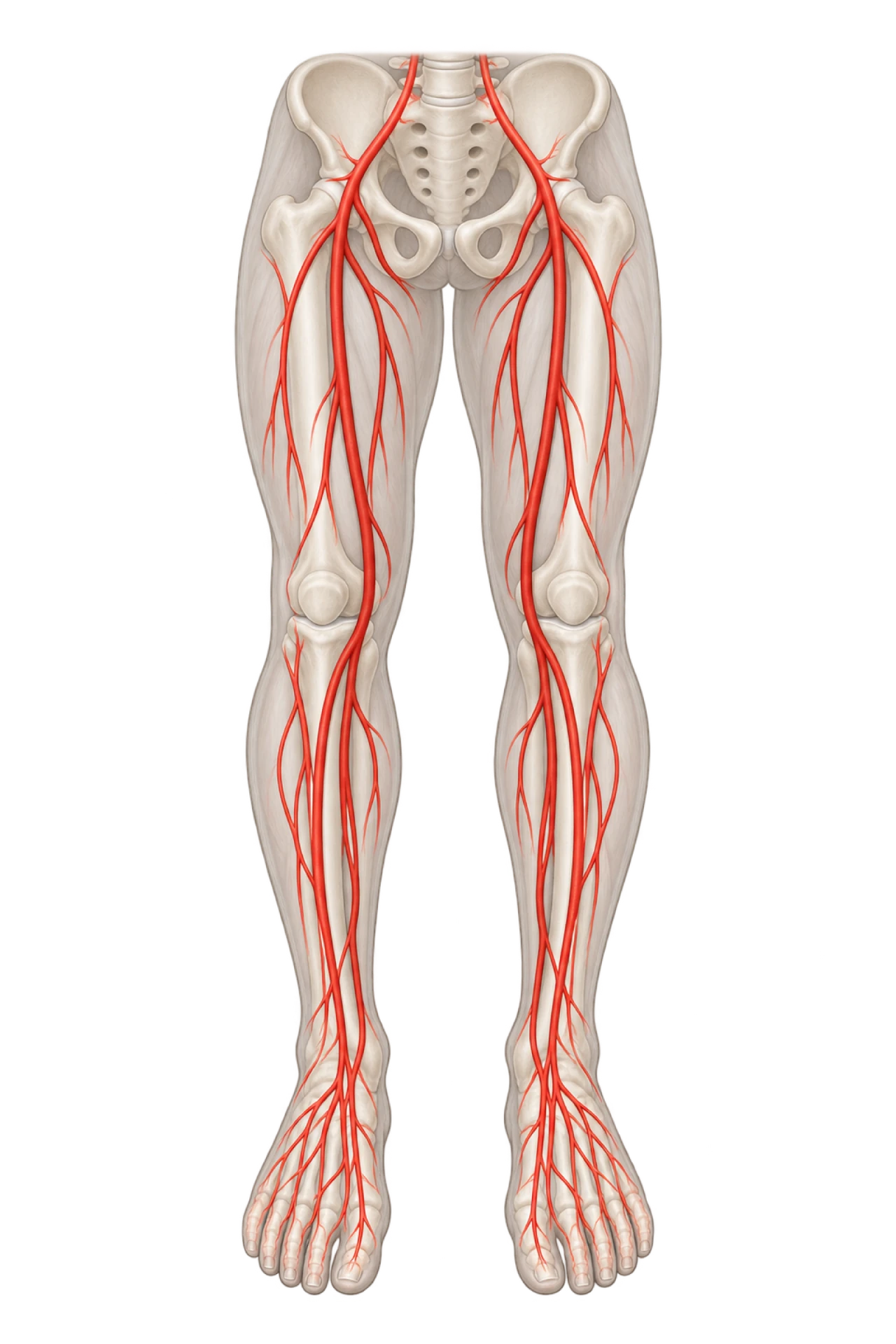
Working legs
Blood supply
A separate study found a smaller sympathetic nerve and blood-pressure response to resisted breathing in eight young women than in seven young men at forty percent of peak oxygen uptake. It did not measure the change in blood flow to their working legs. The two-liter figure above comes from a study of men; we cannot turn it into a number for women.
In another study, ten young male athletes and eleven male master athletes, averaging about sixty-five years old, completed a cycling test after a task designed to tire the breathing muscles. Compared with a sham task, time to exhaustion fell by an average of about fifteen percent in the younger group and forty percent in the masters. This was a specific laboratory protocol, not a forecast for every older rider.
Same workload · different duration
The same ride. A different clock.
Relative time to exhaustion. The workload stayed the same.
The wrong question
Every coach reads this and thinks: train the breathing muscles. Make them stronger so they tire later.
That helps. The meta-analysis I quoted last issue says so. But it's the wrong question, because it never asks why the breathing muscles were tired so early in the first place.
Your diaphragm is not necessarily weak. It's one of the most fatigue-resistant muscles you own. Strength may help, but it does not tell me why this athlete's breathing work feels so costly. In my practice, I also look at whether the trunk is held.
What I see when it gets hard
Look at a rider when the effort goes up. Belly braced. Ribs pulled down. Shoulders up by the ears. Low back locked.
Nobody teaches that. It's what a body does when something is at stake, year after year. It braces, to be ready. And it forgets how to let go.
Inside a trunk like that, the diaphragm may have less room to move. A held belly resists expansion, and ribs that stay pulled down cannot widen as freely. The breath can become short and high, with the neck and shoulders doing more work. This is a pattern I see in riders under load, not something the blood-flow experiments measured.
More breathing work. Earlier fatigue may follow. Near maximal effort, the reflex can reduce blood flow to working legs.
That pattern may be worth exploring alongside fitness. How you hold yourself under load is not fixed, and it can be worked with over time.
Why I don't start with the diaphragm
This is where my work goes further than the papers, because the papers treat the trunk as fixed background. I treat it as the variable.
In my work, a braced trunk is not only a mechanical problem. For some people, the brace is there before the ride, in the car, at the desk, in bed. It can be a posture built over years, out of protection, pressure and the environment a person lives in. A pattern held that long can become hard to notice. It may feel like the resting state.
That's why you can't fix it by pushing on it. Tell a braced body to relax its belly at three hundred watts and it will do the opposite, because you just asked it to drop a guard it doesn't know it's holding, during the exact thing it's guarding against.
The work is two things at once. We work with chronic tension in the trunk, slowly, at rest first and then under small loads, so the ribs and belly have more room to move. We pay attention to the breath at the same time. In my practice, room and a sense of ease support each other. This is the approach I use, not a result established by the blood-flow papers.
Breathing exercises still matter. But when someone has held their trunk for years, I do not rely on them alone. I work on the available movement and the breath together, then see how both change over time.
Making room for the breath
What changes when the trunk can move?
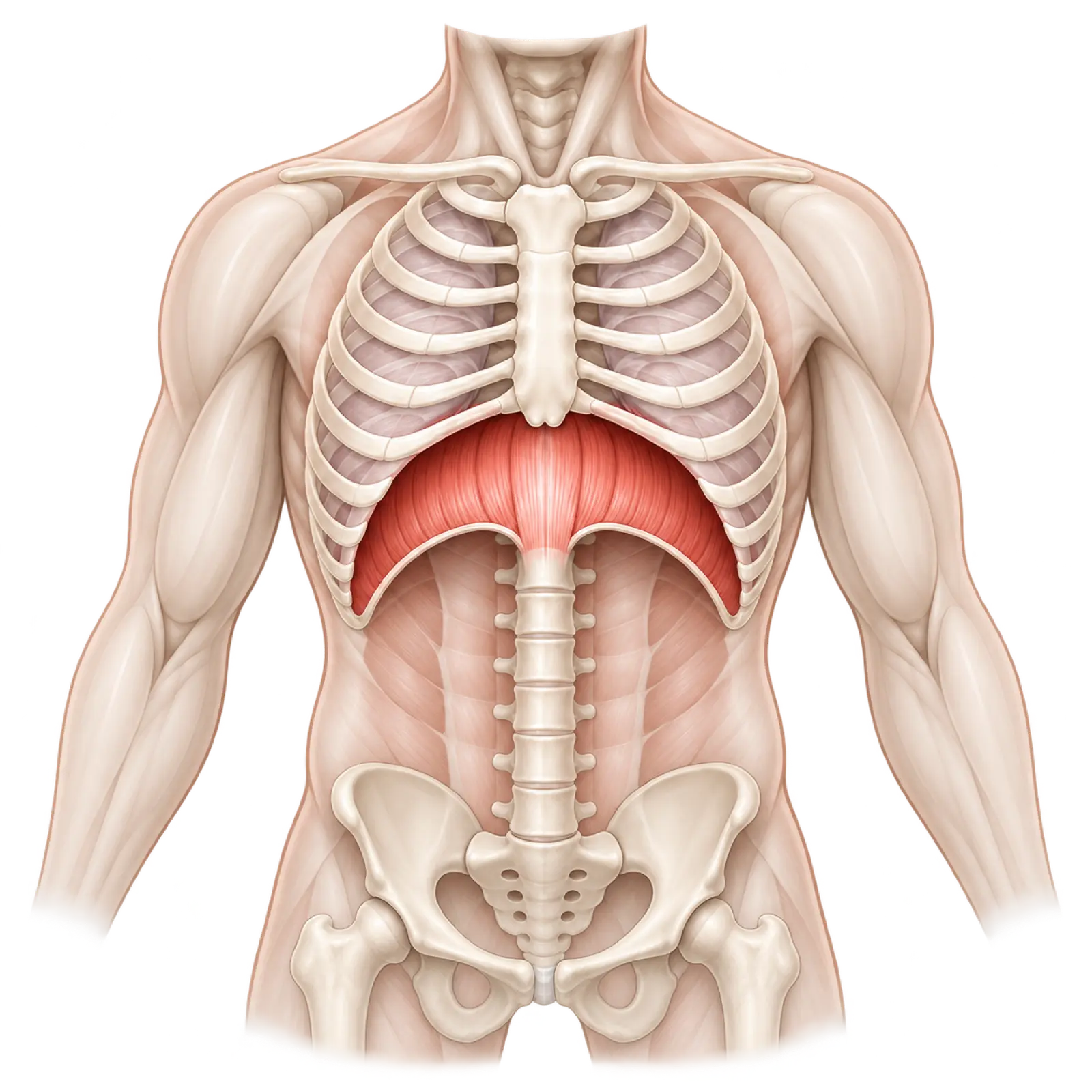
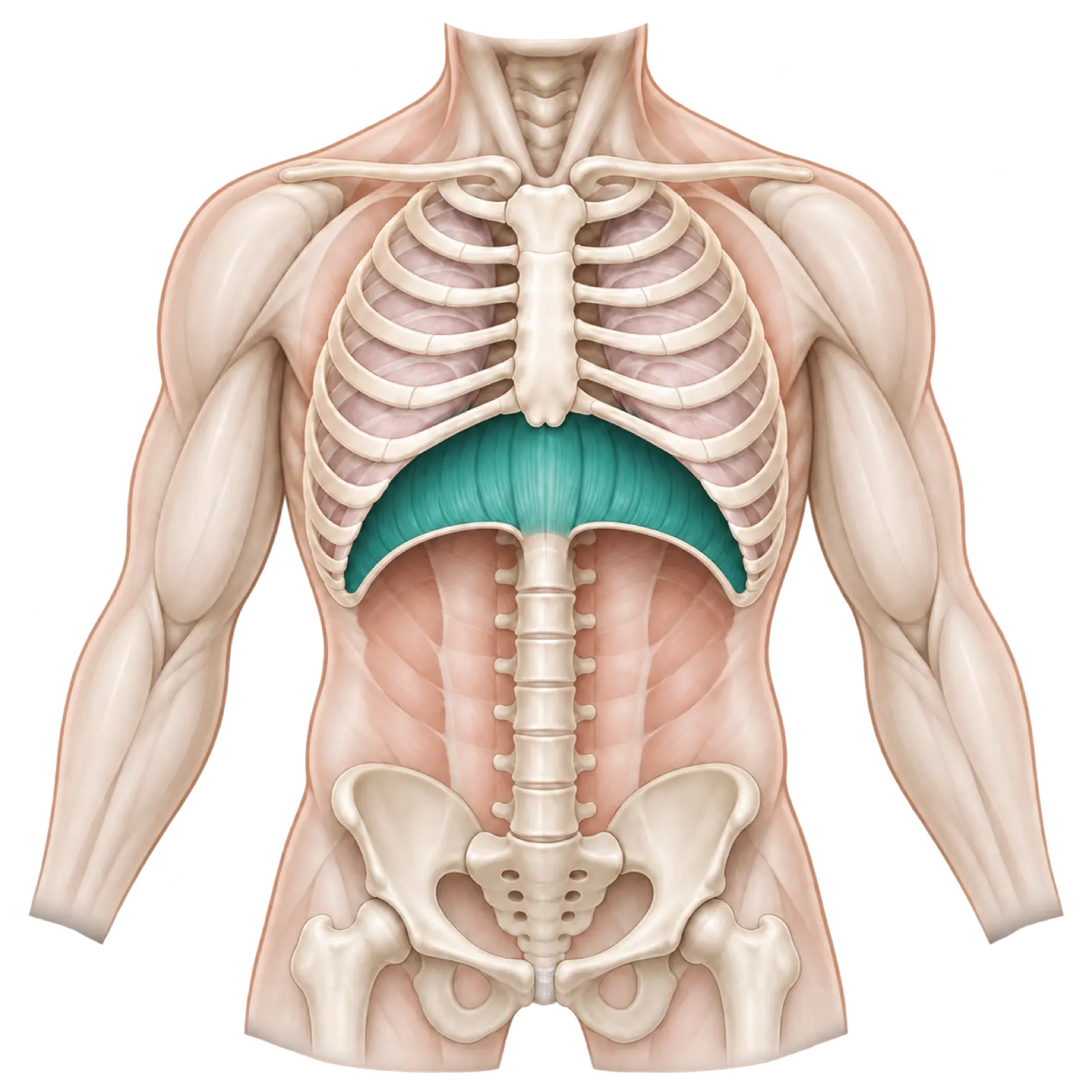
A held belly and ribs can leave less room for the diaphragm to move.
Work with the trunk gradually, at rest first, then under manageable load. Attend to the breath as movement changes.
A rider, three weeks, no extra intervals
The same rider from last issue. Breathing was his limiter, not fitness. Three weeks. Not one extra interval.
We released his trunk and his diaphragm. He paid attention to the breath on every ride. His words: the legs were much better, breathing stopped being the limiter, and he climbed at a level above what he was used to.
He did not add intervals to his cycling training. We did not measure his leg blood flow, so I cannot claim how much it changed.
Three weeks was enough for him to feel a change. It is not enough to finish it. Patterns like this, chronic holding and a breath shaped over years, can take time to change, and they can return under pressure until the new pattern is more familiar than the old one. I won't pretend otherwise. What you can work toward is a body that does not need to brace through every effort.
Off the bike
You don't need a bike to notice a held trunk. It can show up before a hard conversation, in the third hour of a meeting, at two in the morning with the phone next to the bed. That does not mean the same leg-blood-flow reflex is active there. It means the habit of holding is worth noticing beyond the ride.
One thing to check
On your next hard ride, feel your trunk. Not your legs, your trunk.
Is the belly moving with the breath? Is the ribcage widening, and in which direction, sideways or up? Or are your shoulders up by your ears and your neck tight?
That's where your cost sits. Belly, ribs, or neck. Three answers, and each one says something different about what's holding.
The next issue is about the room itself: what exactly has to move in the trunk, and why every breathing technique you've tried only works inside the room you already have.
The cost of breathing, two of five.
JB
Sources and scope +
- Harms CA, Babcock MA, McClaran SR, et al. Respiratory muscle work compromises leg blood flow during maximal exercise. Journal of Applied Physiology. 1997;82(5):1573–1583. doi:10.1152/jappl.1997.82.5.1573. Maximal-effort blood-flow experiment in seven male cyclists.
- Harms CA, Wetter TJ, St Croix CM, Pegelow DF, Dempsey JA. Effects of respiratory muscle work on exercise performance. Journal of Applied Physiology. 2000;89(1):131–138. doi:10.1152/jappl.2000.89.1.131. Time to exhaustion at 90% maximal power.
- Katayama K, Goto K, Ishida K, et al. Effect of increased inspiratory muscle work on blood flow to inactive and active limbs during submaximal dynamic exercise. Experimental Physiology. 2019;104(2):180–188. doi:10.1113/EP087380. At 40% of peak oxygen uptake, working-leg blood flow was not reduced.
- Katayama K, Smith JR, Goto K, et al. Elevated sympathetic vasomotor outflow in response to increased inspiratory muscle activity during exercise is less in young women compared with men. Experimental Physiology. 2018. doi:10.1113/EP086817. Eight women and seven men were studied at 40% peak oxygen uptake; working-leg blood flow was not measured.
- Mons V, Lavigne C, Meste O, Mauroy B, Blain GM. Ageing exacerbates the adverse effects of respiratory muscle fatigue on vascular function, locomotor muscle fatigue and exercise performance in males. Experimental Physiology. Published online 2025;111(1):283–299 (2026 print issue). doi:10.1113/EP092897. Ten young male and eleven master male athletes studied under a specific fatigue protocol.
The studies above measured changes in breathing work, leg blood flow, and performance under specific test conditions. The trunk-and-breath work and the rider’s experience describe Jani’s approach in practice.